The Parable of the Barren Fig Tree
No fixed feast day in the calendar
Flip the card and scan the QR code on the back to open it in the app
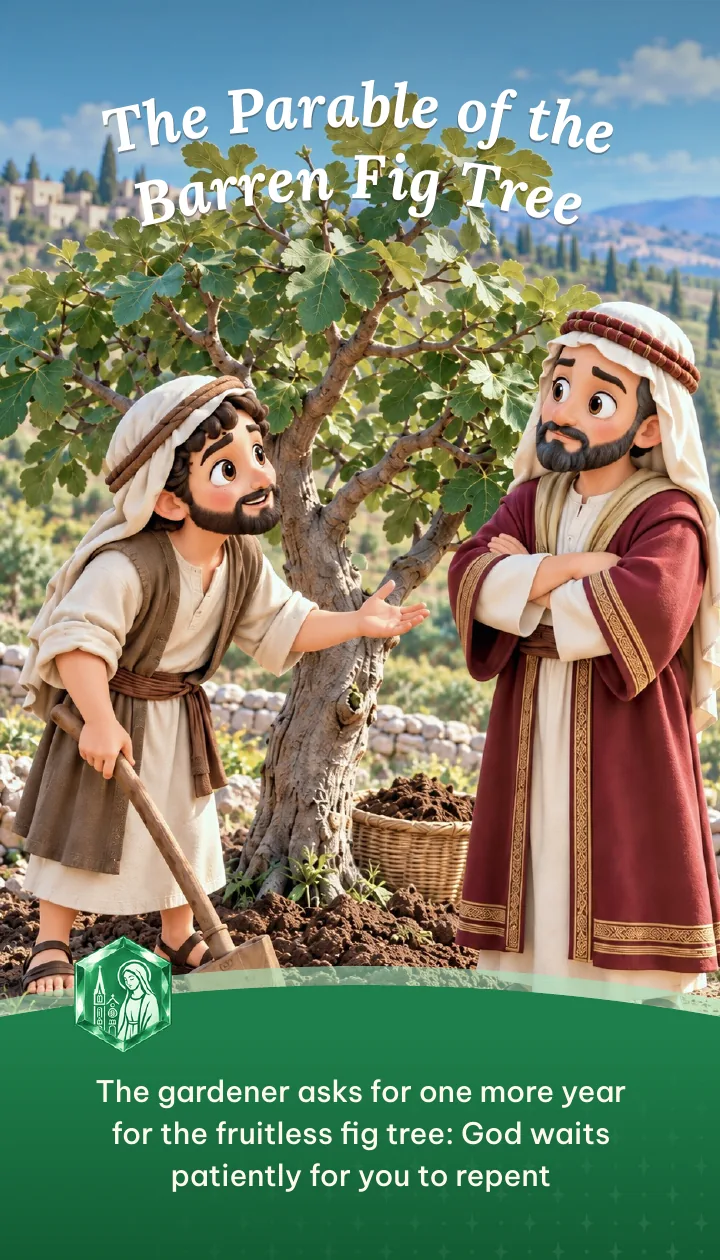
The gardener asks for one more year for the fruitless fig tree: God waits patiently for you to repent
What is this parable?
The fig tree is a familiar tree in the land of Israel, with big leaves and sweet fruit. Jesus told the parable of the barren fig tree right after a conversation (cf. Lk 13:1-9). Some people told the Lord about some Galileans who had been killed; the Lord himself also spoke of eighteen people who died when a tower fell on them. The Lord made it clear that they were not greater sinners than everyone else: “By no means!” (Lk 13:5). Do not think that people who have an accident must be worse sinners than others. But the Lord used the moment to call everyone to repent (cf. Lk 13:3, 5). To repent means to be sorry, to give up what is bad and to turn back to God.
The story
Jesus says: “There once was a person who had a fig tree planted in his orchard” (Lk 13:6). He came looking for fruit and found none. He said to the gardener: for three years now I have come looking for fruit and found none; cut it down, why should it use up the soil? (cf. Lk 13:7).
The gardener asked to leave it one more year. He would dig around it and fertilize it, and said: “it may bear fruit in the future. If not you can cut it down.” (Lk 13:9).
The story stops there. The Lord does not tell us whether the tree bore fruit the next year.
The card shows the moment when the gardener has just loosened the soil around the trunk and set a basket of fertilizer beside it, and turns back to plead with the owner, who stands waiting with his arms folded.
What does Jesus want to teach you?
The fig tree is a picture of each one of us. God plants you, cares for you and waits for you to bear fruit: kindness, obedience, good deeds. The gardener shows God’s patient mercy: he gives you more time and more help. But the parable also seriously reminds us that this time is limited. The story is left open so that you yourself can answer: this year, will you bear fruit?
A lesson for you
- Every evening, examine your conscience: what good thing did I do today?
- Do not keep putting things off; if you want to correct a fault, start today.
- Go to confession often, so that the Lord can care for your soul and make it new.
Identifying marks
- A green, healthy fig tree with big leaves but no fruit: the tree is cared for but has not yet borne fruit; God hopes for good fruit from you.
- The gardener holding a wooden hoe, the soil around the trunk freshly loosened: God’s mercy takes care of each person and gives more help to change.
- A basket of fertilizer at the foot of the tree: the gardener cares for the tree with all his heart so that it has a chance to bear fruit; God also gives you much help so that you can change.
- The gardener turning back to plead, the owner waiting with his arms folded: God still gives you time, but that time is not without end; repent today.
The text on this page is the card in the Catholic Information app, word for word.
Compiled by i-Catholic · About